The Influencer Driven Chilled Carb Trend: Science or Hype?
What Retrogradation Research Really Shows About Resistant Starch and Metabolism
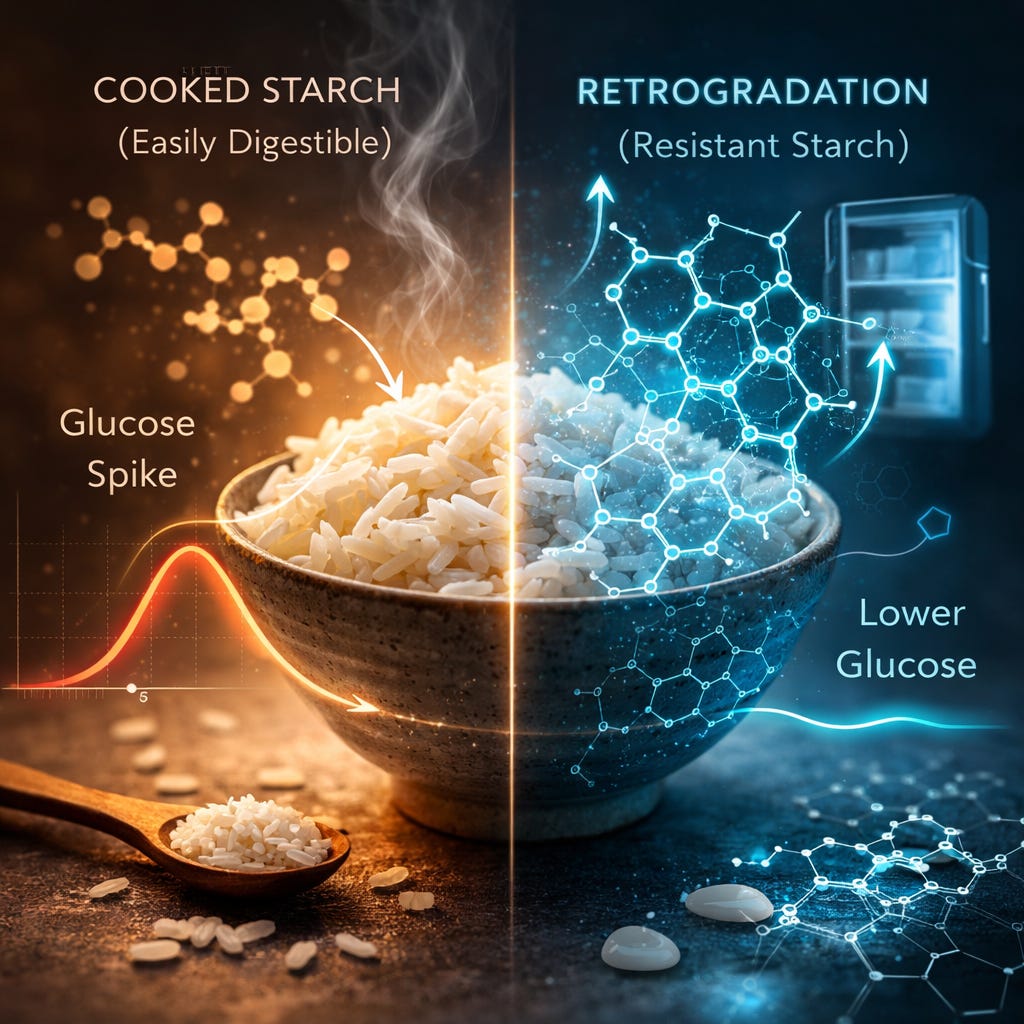
Cooling cooked rice, pasta, or potatoes can increase resistant starch and may blunt blood sugar spikes. However, evidence suggests it does not meaningfully reduce calories. The main benefit appears metabolic rather than caloric.
Study Details
The concept being promoted online is called retrogradation, a well-described biochemical process in starch science. When carbohydrate-rich foods such as rice or potatoes are cooked, their starch structure changes. Cooling them afterward partially reorganizes the starch molecules into a form that resists digestion.
Most human research over the past decade has focused on post-meal blood glucose response rather than weight loss itself. These studies are typically small crossover trials comparing freshly cooked starches with cooked-and-cooled versions.
The majority of published data involve rice, with some studies on pasta and potatoes.
Methodology
Most studies use:
Small sample sizes, often 10–40 participants
Short-term metabolic measurements
Standardized test meals
Continuous glucose monitoring or serial blood draws over 2–4 hours
Participants consume either freshly cooked carbohydrates or previously cooked and chilled versions. Researchers then measure postprandial glucose and insulin levels.
Few long-term weight-loss trials exist. Most data are mechanistic or metabolic rather than body weight outcomes.
Key Findings
Cooked-then-cooled rice may lower post-meal blood glucose compared with freshly cooked rice
Resistant starch increases modestly after chilling
Calorie content does not significantly change
Insulin response may be lower after consuming retrograded starch
Effects vary by grain type and preparation method
No strong long-term evidence shows meaningful weight loss from chilling alone
What Is Actually Happening Biologically
Starch contains two main components:
Amylose, which digests more slowly
Amylopectin, which digests quickly and raises blood sugar rapidly
Cooking gelatinizes starch, making it easier to digest. Cooling allows some of that starch to re-form into resistant starch. Resistant starch behaves more like fiber in the gut. It passes to the colon where it can be fermented by gut bacteria.
This fermentation may influence:
Insulin response
Satiety hormones
Short-chain fatty acid production
Appetite regulation
However, the calorie difference is minimal because resistant starch still provides some energy through fermentation.
Implications for Practice
For Patients
Chilling carbohydrates may modestly reduce blood sugar spikes. That could:
Improve glycemic control in people with insulin resistance or type 2 diabetes
Reduce rapid hunger after meals
Potentially support better appetite control
But it is not a shortcut to major calorie reduction. It should not replace overall dietary quality improvements such as increasing whole grains, fiber, and minimally processed foods.
For Healthcare Providers
The metabolic effects are plausible and supported by short-term data. However:
Evidence for clinically meaningful weight loss is limited
Effects depend on food variety and preparation
Long-term adherence may be impractical
This approach may be considered as an adjunct strategy for patients struggling with postprandial glucose spikes, but it should not be framed as a calorie-cutting hack.
Whole grains with naturally higher resistant starch may provide similar or greater benefit without additional preparation steps.