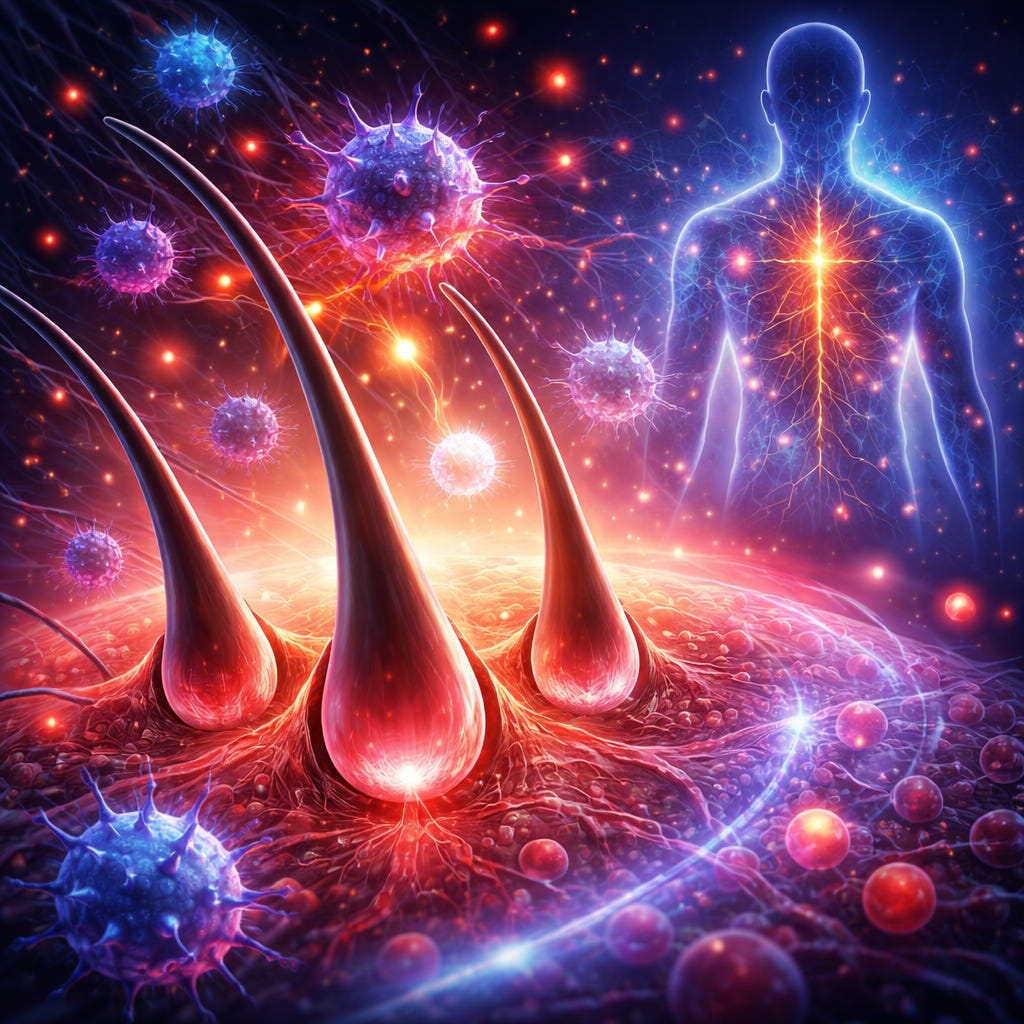
Systemic Inflammation Drives Alopecia Areata Beyond the Scalp
Why whole body immune control may be key to more durable hair regrowth in alopecia areata
Emerging clinical and biological evidence suggests alopecia areata is fueled not only by inflammation at the hair follicle but by a broader systemic inflammatory state, pointing to combination strategies that extend beyond scalp focused treatment.
Study Details
Alopecia areata is an autoimmune condition in which immune cells mistakenly attack hair follicles, leading to patchy or complete hair loss. Traditionally, treatment has focused on suppressing inflammation at the scalp. New insights presented at the Sixth Inflammatory Skin Disease Summit highlight that this local view may be incomplete.
Natasha Mesinkovska, MD, PhD, from the University of California Irvine, emphasized that the immune activity driving hair loss often reflects a body wide inflammatory environment. This helps explain why alopecia areata frequently coexists with other inflammatory conditions such as atopic dermatitis and why relapse is common when therapy is stopped.
Methodology
The conclusions are based on a synthesis of clinical experience, observational data, and mechanistic research. This includes human treatment outcomes with systemic anti inflammatory drugs and foundational immunology studies, many using animal models, that map how immune cells lose tolerance to hair follicles. These combined approaches allow clinicians to connect bedside responses with underlying immune pathways.
Key Findings
Alopecia areata involves systemic immune activation, not just localized scalp inflammation
JAK inhibitors act systemically and remain the most effective approved therapies, but responses vary and relapse is common after discontinuation
Adjunctive systemic approaches, including low dose oral minoxidil and weight reducing therapies, may lower circulating inflammatory signals
Reducing systemic inflammation early in disease may improve durability of hair regrowth
Implications for Practice
For patients, this evolving view reframes alopecia areata as a condition influenced by overall immune health. Managing inflammation related to weight, metabolic stress, or coexisting inflammatory diseases may meaningfully support hair regrowth alongside standard therapies.
For clinicians, the message is not to replace JAK inhibitors but to think more broadly. Combining proven immunomodulators with therapies that reduce background inflammation could accelerate control and potentially extend remission. Early and sustained treatment appears critical, as stopping therapy too soon often leads to loss of regrowth and missed long term benefit.
These principles may also extend to other inflammatory hair disorders, suggesting a shift toward more holistic immune management in dermatology.