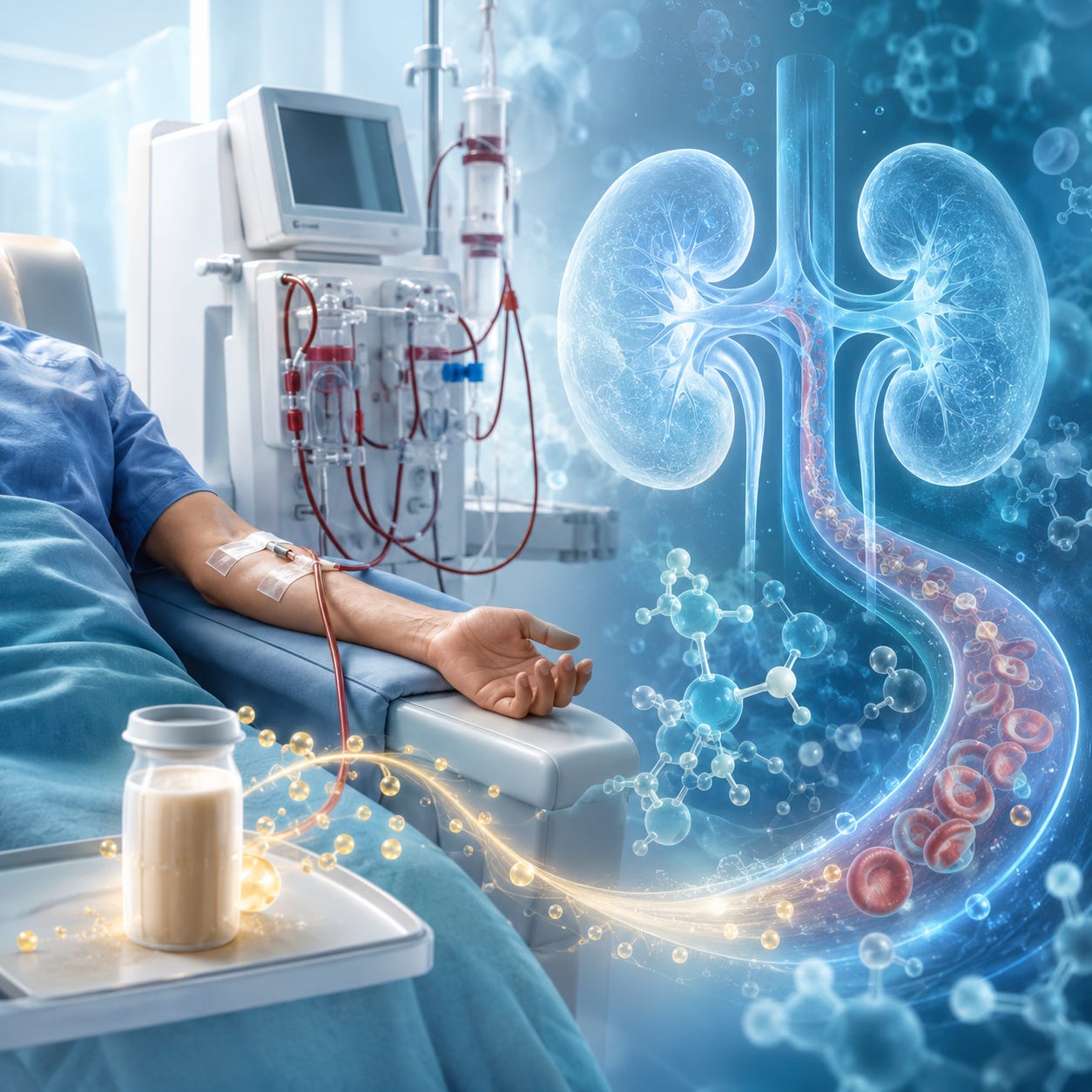
Protein Support During Dialysis May Improve Patient Outcomes
A 12-month quality improvement study suggests that a simple liquid protein supplement after hemodialysis sessions may improve nutrition markers, dialysis adequacy, and hospitalization patterns.
For people receiving hemodialysis, getting enough protein is a daily challenge. A 12-month quality improvement study presented at the National Kidney Foundation Spring Clinical Meeting found that giving a 15-gram liquid protein supplement at the end of each dialysis session was associated with better albumin levels, improved dialysis adequacy, and fewer and shorter hospitalizations.
The study was small, but the findings support a practical idea: nutrition support should be treated as part of dialysis care, not as a separate problem.
Study Details
People on dialysis often face protein energy wasting, a condition where the body loses protein and muscle over time. This can contribute to fatigue, poor recovery from illness, reduced strength, and worse outcomes. Low albumin, a blood marker often used to assess nutritional status, is especially concerning in dialysis patients.
This study focused on patients receiving hemodialysis who had serum albumin levels below 4.0 g/dL for at least 3 months. Unlike people with earlier-stage chronic kidney disease, dialysis patients usually need higher protein intake because treatment itself can increase protein and nutrient losses. Many patients struggle to meet these needs with food alone.
Methodology
The study followed 24 hemodialysis patients for 12 months. Each patient received a 1-ounce liquid protein supplement containing 15 grams of protein at the end of every dialysis session.
Researchers tracked nutritional markers, dialysis adequacy, and real-world outcomes over time. Key measures included serum albumin, serum creatinine, normalized protein catabolic rate, Kt/V, hospitalization frequency, and length of hospital stays.
Key Findings
Hospitalizations decreased from 4.02 to 2.60 times per month after 12 months of supplementation.
Average hospital stay duration decreased from 5.71 to 4 days per month.
Serum albumin improved from 3.59 g/dL at baseline to 3.78 g/dL at month 12.
Kt/V, a measure of dialysis adequacy, increased from 1.56 to 1.69.
Normalized protein catabolic rate remained above 1 g/kg/day and was positively correlated with Kt/V.
Serum creatinine increased modestly from 8.46 mg/dL to 9.29 mg/dL, suggesting possible stabilization of muscle mass, though this change was not statistically significant.
Implications for Practice
For patients, this study points to a simple but important message: protein intake during dialysis care may matter more than many people realize. A small supplement given consistently after treatment may help support nutrition, strength, and recovery. This does not mean every dialysis patient should start a supplement without guidance, but it does suggest patients should ask their dialysis care team whether their protein intake and albumin levels are being actively addressed.
For healthcare providers, the study supports a more integrated approach to dialysis nutrition. Dialysis adequacy and nutrition should not be viewed as separate targets. Patients with low albumin may benefit from structured, low-cost, intradialytic protein support, especially when food intake alone is not enough.
The small sample size and quality improvement design mean these findings should be interpreted cautiously, but the intervention is practical, inexpensive, and clinically relevant.