
Protein May Shape Osteoporosis Treatment Benefits in Older Women
Adequate protein intake may help antiresorptive medications protect hip bone density and strength, while extra calcium may offer little additional benefit when dietary intake is already sufficient.

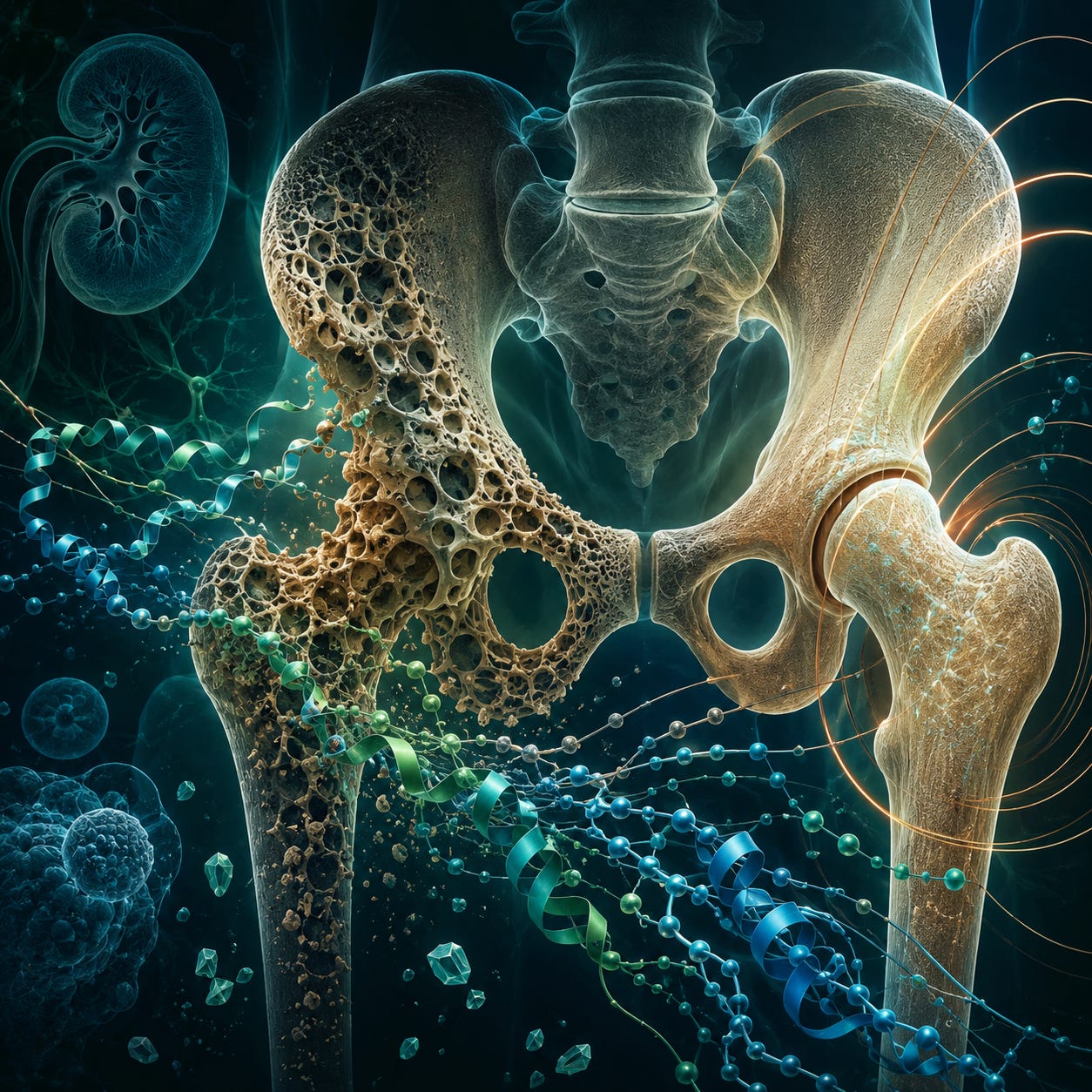
Osteoporosis treatment is usually discussed alongside calcium and vitamin D, but a new study suggests protein intake may also influence how well antiresorptive medications protect the hip. Among older women already consuming enough calcium, supplements were not associated with additional improvements in bone density or strength. Women consuming less than 0.8 grams of protein per kilogram of body weight each day appeared to receive smaller skeletal benefits from treatment.
Why Nutrition Matters During Osteoporosis Treatment
Osteoporosis medications such as bisphosphonates, denosumab, and raloxifene slow the breakdown of bone. They are commonly prescribed with calcium and vitamin D because these nutrients help support bone mineralization and reduce the risk of low blood calcium during treatment.
That practice does not always account for how much calcium a patient is already receiving through food. It may also overlook protein, which supports bone structure, calcium absorption, muscle preservation, and the physical strength needed to prevent falls.
The International Osteoporosis Foundation identifies calcium, vitamin D, and protein as the principal nutritional components of bone health. Dietary calcium is generally preferred, with supplementation used when food intake is insufficient.
Study Details
Researchers performed a secondary analysis of the Geneva Retirees Cohort, an observational study of older adults living in Switzerland.
The analysis included 586 women with a median age of 67 years. Researchers followed them for a median of 3.5 years. Of these participants, 101 were receiving menopausal hormone therapy, 67 were taking antiresorptive medications, and 418 were not using osteoporosis medication.
The antiresorptive group included women taking bisphosphonates, denosumab, or raloxifene. Anabolic osteoporosis treatments such as teriparatide or romosozumab were not evaluated.
Methodology
Calcium and protein intake were estimated using a validated food-frequency questionnaire completed at multiple points during follow-up. Researchers also recorded calcium and vitamin D supplement use.
Bone changes were assessed using standard DEXA imaging, three-dimensional DEXA analysis, and finite element analysis. Finite element analysis uses imaging data and computer modeling to estimate how well the hip may tolerate physical forces.
The researchers examined annual changes in total hip bone mineral density, internal bone structure, and estimated hip strength. Because this was an observational analysis rather than a randomized trial, it can identify associations but cannot prove that increasing protein will directly improve medication effectiveness.
Key Findings
The participants consumed a median of 1,503 milligrams of total calcium daily, including food and supplements. Approximately 71% met the study’s calcium target of at least 1,200 milligrams per day.
Calcium supplements were used by 51% of the women, while 70% used vitamin D supplements. Additional calcium was not associated with significantly better hip bone density or estimated hip strength among women whose calcium intake was already adequate.
Women taking antiresorptive medication lost less hip strength than untreated women. Estimated hip strength declined by approximately 0.5% per year with antiresorptive treatment, compared with 2.2% per year among women receiving no osteoporosis medication.
Among women consuming less than 0.8 grams of protein per kilogram per day, hip strength declined by approximately 2.6% annually despite antiresorptive treatment. The decline was approximately 0.5% among women consuming at least 0.8 grams per kilogram.
Low protein intake was particularly associated with greater loss of trabecular bone density. Trabecular bone is the porous inner structure that helps the hip absorb force.
Calcium supplementation may still matter for patients with very low dietary intake. Among women consuming less than 800 milligrams of calcium daily, osteoporosis medications showed no clear bone benefit in the absence of supplementation.
What 0.8 Grams per Kilogram Means
The protein threshold used in the study was based on body weight. A woman weighing 60 kilograms, or about 132 pounds, would reach 0.8 grams per kilogram by consuming approximately 48 grams of protein per day. At 75 kilograms, or about 165 pounds, the corresponding amount would be approximately 60 grams daily.
This threshold is the general adult recommended dietary allowance, not necessarily the optimal target for every older adult. Some osteoporosis and geriatric nutrition guidance recommends approximately 1.0 gram per kilogram daily, with higher intake considered for certain older adults who are frail, recovering from illness, or at risk of malnutrition. Kidney function and other medical conditions must be considered before substantially increasing protein intake.
Implications for Patients
The findings do not mean that calcium is unimportant or that patients should stop prescribed supplements. They suggest that calcium supplementation should be based on a patient’s total dietary intake rather than prescribed automatically.
Patients taking osteoporosis medication may benefit from reviewing both calcium and protein intake with their clinician or a registered dietitian. This is especially relevant for older adults with reduced appetite, unintentional weight loss, restricted diets, swallowing difficulties, or limited access to protein-rich foods.
Protein can come from dairy products, eggs, fish, poultry, meat, soy foods, beans, lentils, nuts, and seeds. Patients following vegetarian diets may need more deliberate meal planning to consistently reach an appropriate daily intake.
Implications for Healthcare Providers
Nutritional assessment may be a practical part of medication initiation and follow-up. A short dietary history can help distinguish patients who genuinely need calcium supplementation from those already meeting their requirements through food.
Protein intake also deserves attention when patients lose bone density despite treatment, experience sarcopenia, or appear nutritionally vulnerable. Medication adherence, vitamin D status, secondary causes of osteoporosis, renal function, fall risk, and treatment duration remain essential parts of that evaluation.
These findings should not be used to withhold calcium from patients with low intake, vitamin D deficiency, malabsorption, secondary hyperparathyroidism, or a risk of treatment-related hypocalcemia. Denosumab and other medications may have specific calcium and vitamin D requirements that should continue to follow prescribing guidance and individualized clinical judgment.
Important Limitations
The study involved a relatively homogeneous group of Swiss women who generally consumed high amounts of calcium. Only 67 participants received antiresorptive therapy, and that number became smaller when researchers divided them according to protein and calcium intake.
Diet was self-reported, medication adherence could not be measured perfectly, and fracture outcomes were not the primary endpoint. The analysis also did not evaluate anabolic osteoporosis drugs.
The results therefore support nutritional assessment rather than a universal change in supplementation practice. Randomized trials are needed to determine whether deliberately increasing protein intake improves osteoporosis treatment outcomes.
The Bottom Line
Osteoporosis medication does not work in isolation from the patient’s nutritional status. For women already consuming sufficient calcium, automatically adding more calcium may provide little additional skeletal benefit. In contrast, inadequate protein intake may be one reason the hip receives less protection from antiresorptive therapy.
The practical message is not protein instead of calcium. It is to measure what the patient is actually eating and correct the nutritional gap that is present.