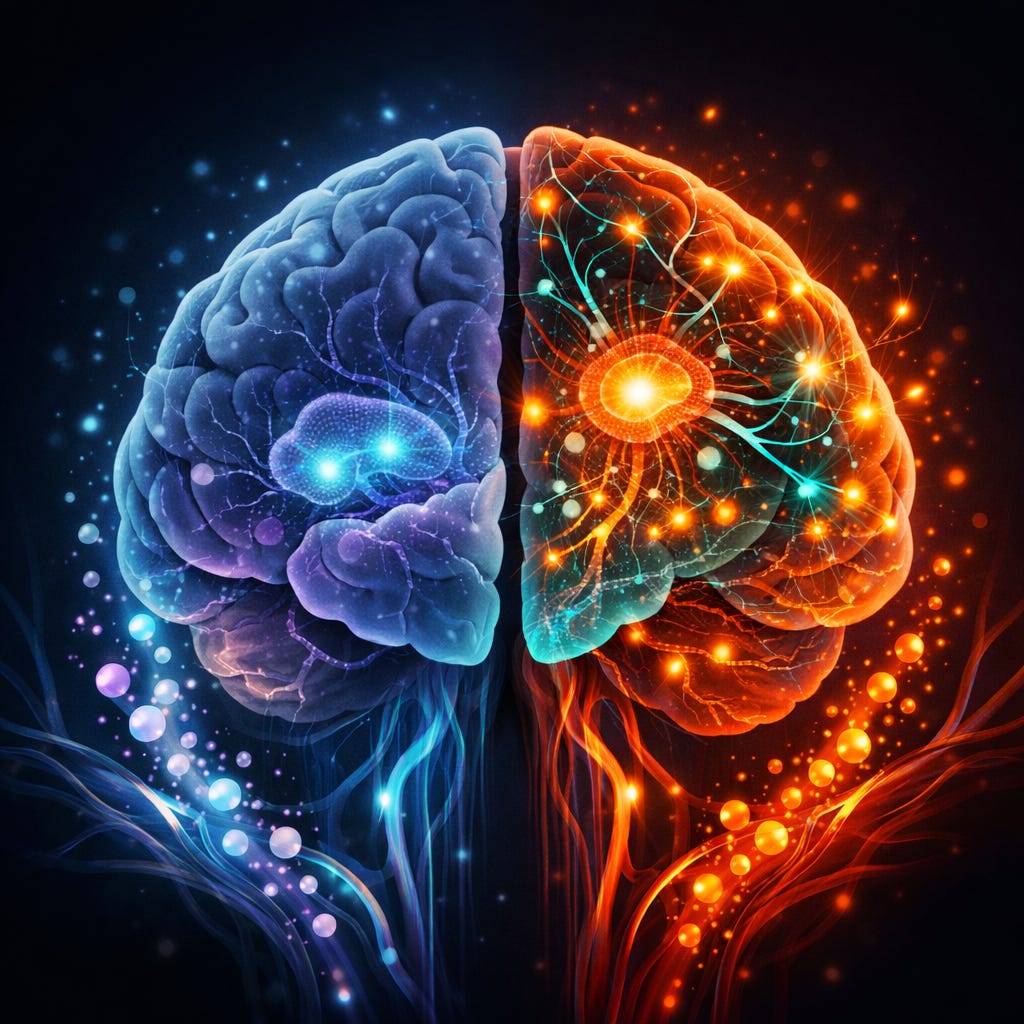
Early Biomarkers in Psychosis Depression May Guide Earlier Care
A large European study suggests blood inflammation markers and brain gray matter patterns may help distinguish early depression from early psychosis before illness becomes more severe.
In a multicenter JAMA Psychiatry study, researchers found that recent-onset depression and recent-onset psychosis showed different combinations of inflammatory blood markers and gray matter changes on MRI, suggesting these disorders may follow distinct biological pathways from the earliest stages.
Summary
Psychiatric diagnosis is still based mostly on symptoms, interviews, and longitudinal clinical judgment. That remains essential. But this new study adds an important layer to the conversation. Researchers working within the European PRONIA project found that young people in the earliest stages of depression and psychosis did not simply share one broad inflammatory profile. Instead, each condition showed a different pattern in blood biomarkers and brain structure.
That matters because early symptoms can overlap. A young person may first present with mood changes, distress, social withdrawal, cognitive slowing, or unusual thinking that does not fit neatly into one category. If future work confirms these findings, biological tools could help clinicians sort risk earlier and tailor interventions more precisely.
Study details
This study came from the PRONIA project, short for Personalized Prognostic Tools for Early Psychosis Management, an EU-funded effort designed to improve early prediction in serious psychiatric illness. Investigators analyzed baseline data from 678 participants across multiple European centers. The cohort included 163 people with recent-onset depression, 177 with recent-onset psychosis, 172 at clinical high risk for psychosis, and 166 healthy controls. Most had little prior exposure to psychiatric medications, which is important because medication can alter both inflammatory signals and brain structure.
The participants were adolescents and young adults, with a median age of 24 years. That is exactly the age window when many depressive and psychotic disorders first emerge, making the dataset especially relevant for early-stage care.
Methodology
Researchers combined two kinds of biological data. First, they measured inflammatory and related blood markers, including IL-6, TNF-α, IL-1β, IL-2, IL-4, CRP, BDNF, and S100B. Second, they used structural MRI scans to measure gray matter volume across the whole brain.
Instead of looking at one marker at a time, the team used machine learning methods to identify patterns linking blood markers with gray matter changes. They then tested whether psychosocial variables, cognitive performance, and medication exposure helped predict who carried these biological signatures. This approach is more useful than a simple one-marker comparison because psychiatric illness is rarely driven by a single pathway.
Key findings
Psychosis showed a distinct inflammatory-brain pattern. Recent-onset psychosis was associated with higher IL-6 and TNF-α, lower CRP relative to the clinical high-risk group, and gray matter shifts involving thalamic, temporal, cerebellar, and attention-related circuits.
Depression showed a different signature. Recent-onset depression was associated with higher IL-1β, IL-2, IL-4, IL-1RA, S100B, and BDNF, along with gray matter reductions in limbic and temporal regions including the amygdala and hippocampus.
The signatures did not substantially overlap. That is one of the paper’s most important findings because it argues against the idea that early depression and early psychosis are biologically indistinguishable.
Psychosocial patterns mattered. Childhood trauma and functional impairment helped predict both signatures, though the trauma patterns differed between depression and psychosis.
Cognition had a stronger link to psychosis. Deficits in working memory, reasoning, and attention predicted the psychosis-related signature, but neurocognitive measures did not significantly predict the depression signature.
Medication was not the main driver. In this minimally medicated cohort, medication exposure did not significantly predict the biomarker signatures, which supports the idea that these patterns may be tied more to illness biology than treatment effects.
Implications for practice
For patients and families, the biggest takeaway is not that a blood test or MRI can now diagnose depression or psychosis on its own. That is not what this study shows. Clinical evaluation remains the foundation of care. But the findings suggest that biology may eventually help clinicians identify which illness pathway a young person is on earlier than before.
For psychiatrists, primary care physicians, neurologists, and mental health teams, this points toward a future of more stratified care. A patient whose presentation sits between mood disorder and psychosis may one day benefit from a diagnostic workup that includes validated biological tools alongside symptom review, history, functioning, and psychosocial context.
The depression pattern in this study leaned toward limbic gray matter reductions and a mixed inflammatory-regulatory signal. The psychosis pattern leaned more toward IL-6 and TNF-α changes plus structural alterations in cortico-thalamo-cerebellar circuitry. If replicated and standardized, that distinction could influence monitoring, early referral, and potentially treatment selection.
At the same time, this was a cross-sectional study, so it cannot prove causation or show how stable these signatures remain over time. It also does not establish a ready-to-use clinical test. External validation is still needed, and real-world implementation would require standardized assays, imaging workflows, and demonstration that these tools improve outcomes.
Still, the study pushes psychiatry a step closer to biologically informed early intervention. That is especially important in youth and young adults, where faster, more accurate differentiation may help reduce delays in effective treatment.