
Carotid Wall Thickness May Reveal Early Heart Remodeling
A large study links thicker carotid artery walls with subtle changes in the heart and aorta before cardiovascular disease becomes clinically apparent

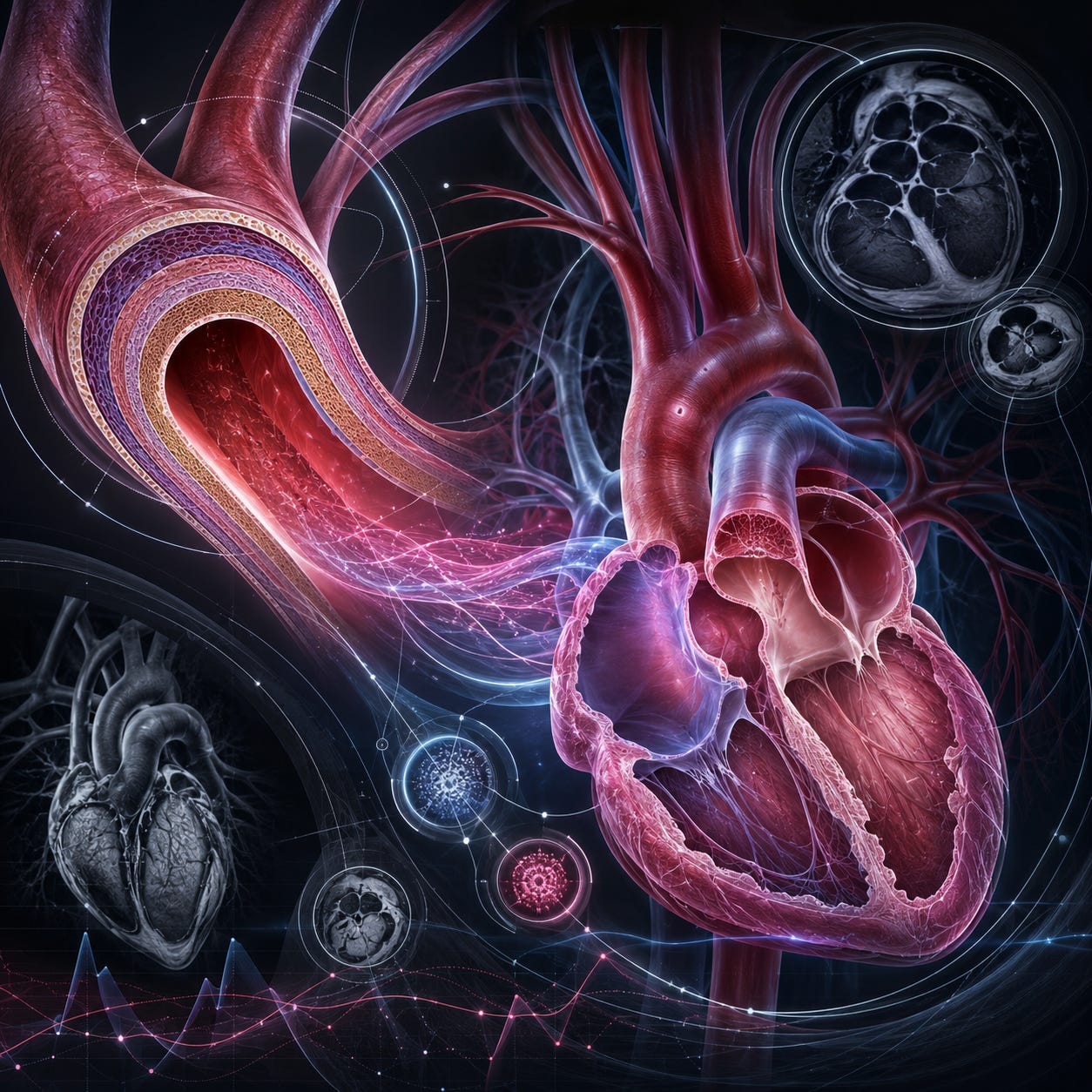
A thicker carotid artery wall was associated with enlargement of the aorta and cardiac chambers, along with modest reductions in atrial and ventricular function, among people without diagnosed cardiovascular disease. The findings suggest that vascular changes in the neck may reflect broader structural changes occurring throughout the cardiovascular system.
Why This Study Matters
Atherosclerosis is often discussed as a problem involving blocked arteries. However, cardiovascular disease develops across an interconnected system that includes the arteries, heart muscle, chambers, and valves.
Carotid intima-media thickness, commonly abbreviated as cIMT, measures the thickness of the inner and middle layers of the carotid artery wall using ultrasound. An elevated measurement can indicate vascular ageing or early atherosclerotic change, even when a person has no symptoms or known cardiovascular disease.
The new study examined whether a thicker carotid wall is also connected with changes in the size and performance of the heart and aorta. The results suggest that cIMT may offer a broader view of cardiovascular health than previously understood.
Study Details
Researchers from University College London analysed imaging and genetic information from the UK Biobank. The study included 46,102 participants who had undergone both carotid ultrasound and cardiac magnetic resonance imaging.
Participants were approximately 65 years old on average, and slightly more than half were women. None had established cardiovascular disease when included in the analysis.
Methodology
Ultrasound images were used to measure the thickness of the carotid artery walls on both sides of the neck. Automated imaging systems also identified carotid plaque and performed quality checks.
Cardiac MRI was then used to measure the aorta and all four chambers of the heart. Researchers examined chamber size, wall thickness, blood volumes, muscle mass, and ejection fraction, which reflects how effectively a chamber moves blood.
The researchers also compared genetic variants associated with cIMT against genetic data related to heart and aortic structure. This allowed them to investigate whether vascular thickening and cardiac remodeling may share some inherited biological pathways.
This was primarily an observational and cross-sectional analysis. It could identify relationships but could not establish that carotid wall thickening directly caused the cardiac changes.
Key Findings
Higher cIMT was consistently associated with larger aortic dimensions, larger cardiac chambers, and greater atrial and ventricular blood volumes.
Participants with thicker carotid walls had lower left and right atrial ejection fractions and slightly lower left ventricular ejection fractions.
Genetic analysis identified shared inherited patterns connecting cIMT with descending aortic diameter, left ventricular mass, ventricular wall thickness, and left atrial function.
Seven overlapping genes were associated with vascular development, cardiac formation, extracellular matrix organization, and tissue remodeling.
Higher left-sided cIMT was unexpectedly associated with a 52.5% lower risk of dilated cardiomyopathy. This isolated result had limited statistical strength and should not be interpreted as evidence that carotid thickening protects the heart.
cIMT was not significantly associated with subsequent atrial fibrillation, heart failure, or hypertrophic obstructive cardiomyopathy in the clinical outcome analysis.
The Cardiovascular System May Remodel Together
The most important finding is not that one neck measurement can diagnose heart disease. It is that vascular thickening and cardiac remodeling appear to occur as parts of a connected biological process.
Long-term exposure to high blood pressure, elevated cholesterol, inflammation, diabetes, smoking, obesity, and ageing can affect both the arteries and the workload placed on the heart. As arteries become thicker or less flexible, the heart may need to work differently to maintain circulation. Over time, this may contribute to enlargement, increased muscle mass, or reduced chamber efficiency.
The genetic overlap identified in the study supports the possibility that vascular and cardiac remodeling also share underlying developmental and tissue-repair pathways.
What Patients Should Know
A high cIMT measurement does not mean that a person has heart failure or that a heart attack is imminent. It is better understood as a possible sign of accumulated vascular stress.
Patients who are found to have increased carotid wall thickness should discuss their complete cardiovascular risk profile with a healthcare provider. Blood pressure, cholesterol, blood sugar, smoking, physical activity, weight, family history, and existing plaque remain more actionable than the ultrasound measurement alone.
The study did not test whether treating cIMT improves heart structure or prevents cardiovascular events. It also does not support ordering cardiac MRI for every person with an elevated measurement.
Implications for Clinical Practice
For healthcare professionals, the findings support viewing cIMT as a potential marker of systemic cardiovascular remodeling rather than an isolated feature of the carotid artery.
An unexpectedly elevated cIMT result in a high-risk patient may justify closer evaluation of modifiable risk factors and consideration of whether additional cardiac assessment is clinically appropriate. Decisions should still be guided by symptoms, blood pressure, lipid levels, diabetes status, physical examination, electrocardiography, and established cardiovascular risk models.
Routine cIMT measurement is not currently recommended for general primary prevention risk assessment. Earlier guidelines concluded that it did not add enough predictive value beyond established risk tools to justify widespread screening. This study expands the biological case for cIMT, but it does not yet establish that using the measurement routinely improves patient outcomes.
Important Limitations
The UK Biobank population is healthier and less socioeconomically deprived than the general population, and most participants are of European ancestry. The results may therefore not apply equally across all communities.
Because much of the imaging analysis captured participants at one point in time, it is unclear whether arterial thickening occurred before, after, or alongside the cardiac changes. The genetic associations also involved relatively small effects and do not prove a direct causal pathway.
Prospective studies will be needed to determine whether cIMT can identify patients whose cardiac structure will worsen and whether targeted preventive treatment changes that trajectory.
The Bottom Line
A thicker carotid artery wall may reveal more than early vascular disease. It may also reflect subtle remodeling across the heart and aorta before cardiovascular disease becomes clinically visible.
For now, cIMT remains a promising research and selective risk-assessment tool rather than a routine screening test. Its greatest potential may be as one component of a broader effort to detect cardiovascular injury earlier, while prevention can still make a meaningful difference.